
The Complete Guide to Great Migration Safari in 2026
Follow the herds across endless plains. Tanzania’s Great Migration is nature’s greatest journey, waiting for you in 2026.
The Great Migration Safari is one of the most amazing and unforgettable wildlife experiences in the world. It involves over 1.5 million wildebeest, along with large groups of zebras, moving all year round. This natural journey takes place between Serengeti National Park and Maasai Mara National Reserve, as the animals follow the rains in search of fresh grass and water.
The best time for a Great Migration Safari depends on what you want to see and experience. From January to March, many wildebeest are born in the southern Serengeti, attracting predators and creating intense wildlife action. From June to October, the herds move north and cross rivers like the Grumeti and Mara, which is one of the most thrilling and popular parts of the migration.
This is one of Africa’s most popular safari experiences, so it is important to plan early. Booking your trip well in advance can help you secure the best locations and guides. This complete guide to Great Migration Safari will help you plan a smooth, exciting, and truly unforgettable adventure while experiencing the Serengeti wildebeest migration at its best.
What is the Great Migration Safari?
A Great Migration safari is a wildlife experience that follows the annual movement of millions of wildebeest and zebras across the Serengeti and Mara ecosystems. It is one of Africa’s most iconic safari experiences, and this complete guide to Great Migration Safari offers travellers a comprehensive understanding of the migration across seasons and regions.
The best time to experience a Great Migration safari depends on what you want to see. From July to October, visitors can witness dramatic Mara River crossings, where thousands of animals face strong currents and predators, including crocodiles. From January to March, the southern Serengeti becomes the calving ground, where hundreds of thousands of wildebeest calves are born, attracting intense predator activity from lions, cheetahs, and hyenas.
A Great Migration safari typically includes guided game drives, stays in safari lodges or tented camps positioned along migration routes, and expert tracking of herd movements. Because the migration is continuous and driven by rainfall, the experience changes throughout the year, making it a truly complete guide to Great Migration safari experience for travelers who want to witness every stage of this natural cycle.
For travelers seeking a full and exciting wildlife journey, this safari offers large herds, close predator action, and changing landscapes in some of the world’s most famous parks, giving you a chance to see the Great Migration up close for yourself.
Best Time to see the Great Migration
The best time to see the Great Migration in Serengeti National Park and the Maasai Mara National Reserve depends on the experience you are looking for, as the migration is a year-round movement driven by rainfall and grazing.
The most popular and dramatic time is July to October, when massive herds gather in the northern Serengeti and Maasai Mara and attempt the famous Mara River crossings. This is the peak safari season, offering intense wildlife action with large herds, crocodile-filled waters, and high predator activity.
The second key period is January to March, when the herds concentrate in the southern Serengeti around Ndutu for the calving season. This is one of the most productive wildlife viewing times, with hundreds of thousands of newborn calves and frequent predator encounters on open plains.
Outside these peak events, the migration continues through central and western Serengeti, offering quieter safaris, fewer crowds, and lush green scenery, especially during the rainy seasons.
Overall, the best time depends on your priority: river crossings for dramatic action (July–October) or calving season for new life and predator interaction (January–March).
Month-by-Month Guide to the Great Migration Safari
January to March (Calving Season)
During this period, the migration gathers in the southern Serengeti National Park, especially around the Ndutu Plains. This is the calving season, when hundreds of thousands of wildebeest give birth within a few weeks. The abundance of vulnerable newborns attracts a high concentration of predators such as lions, cheetahs, and hyenas, making it one of the most action-packed times for wildlife viewing. The landscape is typically green and fertile due to recent rains, providing excellent grazing for the herds.
April to June (Movement & Early Crossings)
As the long rains set in, the herds begin their journey northwest through the central and western Serengeti. This phase is characterized by long columns of wildebeest moving steadily in search of fresh grass. Around May, the rutting (mating) season begins, bringing dramatic displays of dominance among males. By June, the migration reaches the western corridor, where the first significant river crossings occur at the Grumeti River, often involving lurking crocodiles.
July to August (River Crossing Peak)
This is the most famous stage of the Great Migration. The herds arrive in the northern Serengeti and cross into the Maasai Mara National Reserve, facing the formidable Mara River. These crossings are unpredictable and filled with tension, as thousands of animals plunge into the water while avoiding strong currents and predators like crocodiles. This period offers some of the most iconic and dramatic wildlife scenes in the world, drawing visitors from across the globe.
September to October (Mara Grazing)
After the river crossings, the herds spread out across the Maasai Mara’s rich grasslands. With abundant food and water, the animals spend more time grazing and less time moving rapidly. Predator activity remains high, particularly among big cats, making this an excellent time for sightings. The crowds begin to thin slightly compared to peak months, offering a more relaxed safari experience while still enjoying exceptional wildlife viewing.
November to December (Return South)
With the arrival of the short rains, the migration begins its journey back south into the Serengeti. Fresh grass grows quickly, drawing the herds through central areas and eventually back to the southern plains. This marks the completion of the migration cycle. By December, the animals are settling once again in the south, preparing for the next calving season, and the entire process begins anew.
When and Where to Go
| Months | Region | What’s Happening | Visitor Traffic |
|---|---|---|---|
| January – March | Southern Serengeti / Ndutu | Calving season with over 500,000 wildebeest births and high predator activity. | Moderate |
| April – May | Central Serengeti | Herds move north through green plains during the rainy season. | Low |
| June – July | Western Serengeti / Grumeti | First major river crossings at the Grumeti River. | Low–Moderate |
| August – October | Northern Serengeti / Maasai Mara | Peak Mara River crossings with dramatic wildlife action. | High |
| November – December | Eastern Serengeti | Herds return south to calving grounds. | Low |
Best Places to Stay During the Great Migration
The best places to stay during the Great Migration depend on the season, as the herds move across the Serengeti throughout the year. The most effective way to experience the migration is to stay in lodges or mobile camps located along the herd’s route in the Southern, Western, and Northern Serengeti.
From December to March, the migration is in the Southern Serengeti and Ndutu area, where the calving season takes place. This is the best time to see newborn wildebeest and intense predator action. Top stays include Ndutu Safari Lodge and Sanctuary Kusini, as well as mobile tented camps that follow the herds closely.
From April to June, the herds move through the Western Corridor and Grumeti region, offering quieter safaris and early river crossings. Good options include Dunia Camp and Grumeti Serengeti River Lodge, which provide access to migration movement with fewer crowds.
From July to October, the migration reaches the Northern Serengeti, where the famous Mara River crossings occur. This is the most dramatic stage of the migration. Top luxury options include One Nature Mara River, Kubu Kubu, and Lemala Kuria Hills, as well as seasonal mobile camps positioned near crossing points.
Accommodation in the Serengeti falls into three main types: mobile tented camps that move with the migration, luxury permanent lodges in prime wildlife areas, and budget campsites for low-cost safari travel.
Ultimately, the best Serengeti migration experience comes from aligning your travel dates with the herds’ movements and staying in the right region at the right time.
Great Migration safari Packages
Activities to Do During a Great Migration Safari
Game drives
Game drives are the primary activity and the most effective way to follow the Great Migration. They are usually conducted in the early morning and late afternoon when wildlife is most active. Visitors can observe massive herds of wildebeest and zebras moving across the plains, along with predators such as lions, cheetahs, leopards, and hyenas. Depending on the season, highlights may include dramatic river crossings, predator hunts, or calving events where thousands of newborn animals take their first steps.
Hot air balloon safari
A hot air balloon safari provides a unique and peaceful sunrise experience over the Serengeti. From the air, travelers can see the vast scale of the migration stretching across the plains, along with the natural patterns of rivers, grasslands, and wildlife movement. After landing, guests typically enjoy a traditional bush breakfast in the open savannah, making it one of the most memorable safari experiences.
Guided walking safari
Walking safaris are conducted in designated areas of the Serengeti under the supervision of experienced armed guides. This activity offers a more intimate connection with nature, focusing on smaller details such as animal tracks, medicinal plants, insects, and birdlife. It provides a deeper understanding of how the ecosystem functions beyond the large animal sightings seen on game drives.
Cultural visits
Cultural tours to Maasai communities in Tanzania allow visitors to learn about traditional lifestyles, customs, and the long-standing relationship between people and wildlife. These visits often include demonstrations of daily life, storytelling, and insights into how communities coexist with the surrounding natural environment.
Photography safari
Photography safaris are especially popular during the Great Migration due to the constant movement of animals and dramatic wildlife interactions. Key moments such as river crossings, predator chases, dust-filled stampedes, and golden-hour lighting provide exceptional opportunities for both amateur and professional photographers.
Bird watching and sundowners
The Serengeti is home to hundreds of bird species, making bird watching a rewarding activity throughout the year, especially for nature enthusiasts. Sundowner experiences take place in scenic locations where travelers can relax with drinks while watching the sunset over the vast plains, often accompanied by the sounds of wildlife in the distance.
Cost of a Great Migration
The cost of a Great Migration safari in Serengeti National Park varies widely depending on travel style, season, duration, and accommodation level. Since this is one of the most popular wildlife experiences in Africa, prices are higher during peak migration months, especially for river crossings and calving season.
On average, budget Great Migration safari packages start from about $150–$300 per person per day, usually including camping or basic lodges and shared safari vehicles. Mid-range safaris typically cost around $350–$700 per person per day, offering comfortable tented camps and private or semi-private game drives. Luxury Great Migration safaris can range from $700 to $1,500+ per person per day, especially when staying in premium lodges or fly-in camps located close to migration hotspots.
For a full trip, most 4–7 day Great Migration safari packages generally cost between $1,500 and $7,500+ per person, depending on comfort level and itinerary. Shorter budget trips are more affordable, while longer luxury safaris that follow the migration across different regions are significantly higher in price.
Several key factors affect the total cost. The season is the most important, with July–October (Mara River crossings) being the most expensive. The type of accommodation also plays a major role, with mobile camps and luxury lodges costing more due to their proximity to the herds. In addition, park fees, internal flights, and private guide services can increase the total package price.
In general, choosing the right Great Migration safari package depends on balancing budget, comfort, and timing. Booking early and planning according to migration movement helps secure better rates and better locations close to the action.


What to Pack for a Great Migration Safari
Packing for a Great Migration safari in Serengeti National Park requires lightweight clothing, essential safari gear, and a few practical items to handle long game drives and changing weather conditions. The goal is to stay comfortable, protected from sun and dust, and ready for early mornings and cool evenings.
Start with clothing: pack light, breathable outfits in neutral colors like khaki, beige, or olive. These colors blend well with the environment and keep you cool during the day. Include long-sleeve shirts and trousers for sun protection and insect protection, plus a warm jacket or fleece for early morning and evening game drives.
For footwear, comfortable closed shoes or lightweight boots are best for safari activities. Sandals are useful only around the lodge, not in the bush or during game drives.
Bring essential safari items such as a wide-brim hat, sunglasses, sunscreen, insect repellent, and a reusable water bottle to stay hydrated during long hours in the vehicle.
For wildlife viewing and photography, binoculars are very important for spotting animals at a distance. A camera with a zoom lens, extra batteries, and memory cards is highly recommended to capture key migration moments like river crossings and predator action.
Also pack a small daypack for daily game drives, along with travel documents, personal medication, and basic toiletries. A lightweight rain jacket can be useful during the rainy season.
Optional items include a flashlight or headlamp for camps, a power bank for charging devices, and lip balm or moisturizer for dry safari conditions.
Overall, smart packing ensures comfort and convenience, allowing you to fully enjoy the activities and wildlife experiences of your Great Migration safari.
The calving season in Ndutu
The calving season in Ndutu is one of the most important and dramatic stages of the Great Migration, taking place from January to March in the southern plains of Serengeti National Park, within the wider Ngorongoro Conservation Area ecosystem. This region is made up of nutrient-rich short-grass plains formed by volcanic soil, providing excellent grazing for pregnant wildebeest before they give birth.
At the peak in February, hundreds of thousands of calves are born within just a few weeks. This synchronized birthing strategy increases survival chances by overwhelming predators with sheer numbers. Newborn calves are highly vulnerable but can stand within minutes and run within hours, quickly joining their mothers in the safety of the herd.
This abundance of young attracts a high concentration of predators, including lions, cheetahs, hyenas, and sometimes leopards. Hunting activity is frequent, especially in the open plains where cheetahs excel due to their speed. At the same time, you can also observe powerful protective behavior as herds form groups to defend calves.
The environment during this season is green and lush thanks to the short rains, with fresh grass and scattered water sources supporting both wildlife and newborns. Because the herds are concentrated in one area rather than spread out, game viewing is easier and more predictable compared to other times of the year.
Overall, Ndutu calving season offers a rare and intense safari experience focused on birth, survival, and predator interaction, making it one of the most fascinating wildlife events in Africa.
The Mara River Crossing in Serengeti
The river crossing season of the Great Migration is the most dramatic and iconic wildlife event in Serengeti National Park and the Maasai Mara National Reserve. It takes place mainly between July and October, when huge herds of wildebeest and zebras move from the northern Serengeti into the Maasai Mara in search of fresh grazing.
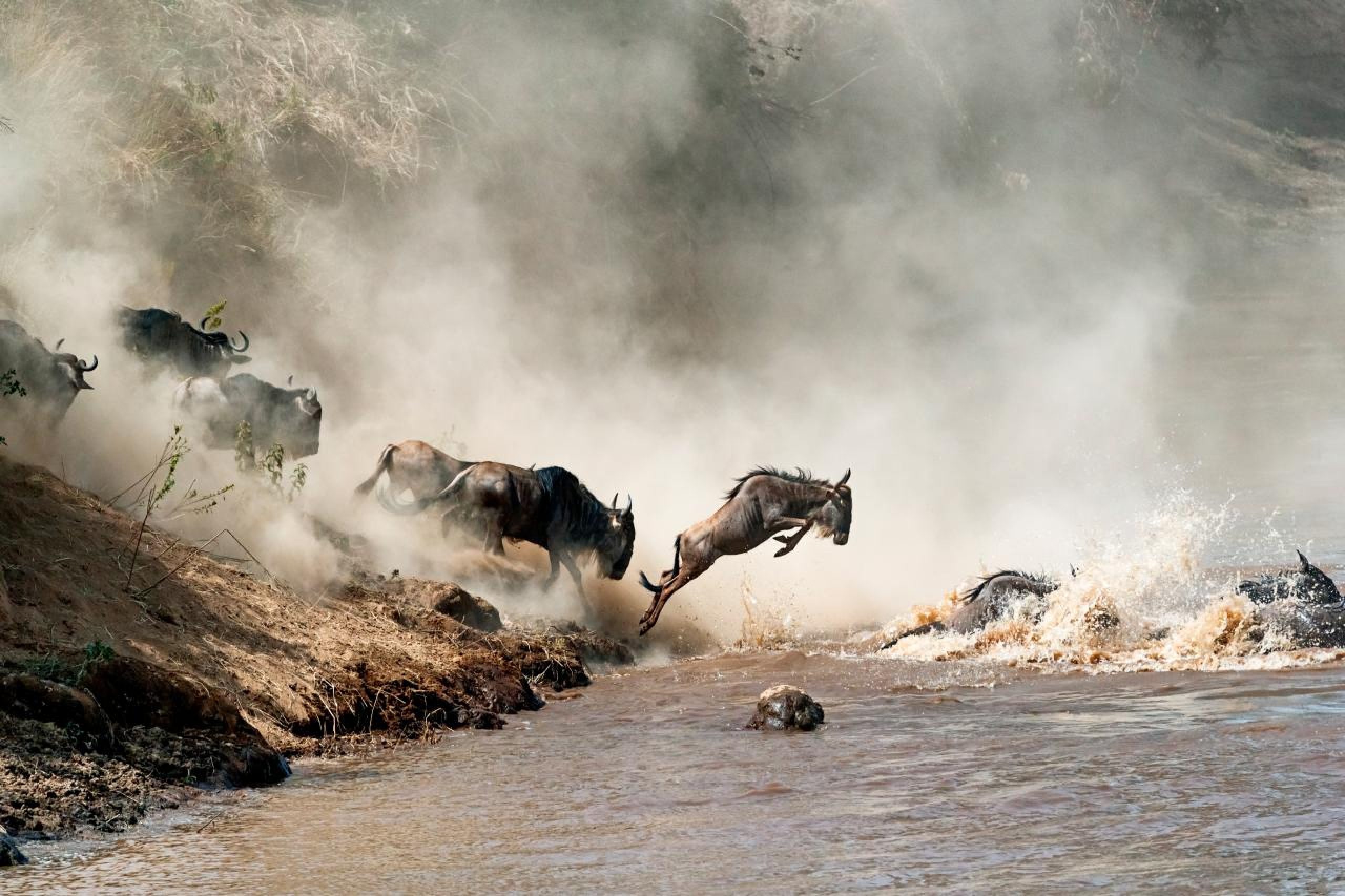
The highlight is the Mara River crossing, where thousands of animals gather at the riverbanks before suddenly plunging into fast-moving waters filled with strong currents and Nile crocodiles. Crossings are unpredictable and can happen in sudden waves or after long delays, creating intense suspense and natural drama.
This period also features high predator activity, with crocodiles attacking in the river and lions and other carnivores targeting vulnerable or separated animals on land. The constant movement and survival pressure make it one of the most intense wildlife spectacles in the world.
Overall, the river crossing season is considered the peak of the Great Migration, offering unmatched wildlife action, mass movement, and raw survival scenes.
How does the Great Migration in Africa Work?
This complete guide to Serengeti National Park for 2026 – 2027 offers essential information for travellers to one of Africa’s most renowned safari destinations. Located in northern Tanzania, the park is known for its vast savannahs, diverse wildlife, and the annual Great Migration of millions of wildebeest and Zebras migrate from Tanzania to Kenya.
Visitors can enjoy Big Five safaris, exceptional bird-watching, and striking landscapes, including rivers, kopjes, and open plains. The park features a range of safari experiences, including luxury lodges, tented camps, guided game drives, and hot-air balloon safaris. The best time to visit depends on your interests: the Great Migration peaks at different times of the year, while the dry season is ideal for wildlife spotting. This guide also covers park entry, accommodation, transportation, and must-see safari experiences, helping travellers plan an unforgettable journey to Tanzania
How does the Great Migration in Africa Work?
This complete guide to Serengeti National Park for 2026 – 2027 offers essential information for travellers to one of Africa’s most renowned safari destinations. Located in northern Tanzania, the park is known for its vast savannahs, diverse wildlife, and the annual Great Migration of millions of wildebeest and Zebras migrate from Tanzania to Kenya.
Visitors can enjoy Big Five safaris, exceptional bird-watching, and striking landscapes, including rivers, kopjes, and open plains. The park features a range of safari experiences, including luxury lodges, tented camps, guided game drives, and hot-air balloon safaris. The best time to visit depends on your interests: the Great Migration peaks at different times of the year, while the dry season is ideal for wildlife spotting. This guide also covers park entry, accommodation, transportation, and must-see safari experiences, helping travellers plan an unforgettable journey to Tanzania
Plan your Trip
Ready to start planning your own incredible adventure?
We make the process stress-free and enjoyable.