
The world famous Serengeti National Park is the First Largest Park in Tanzania; occupying about 14,763 sq Km (5700 sq miles). The parks name Serengeti means Endless plains and is derived from the Maasai word Siringiti. The Park lies in high platens between the Ngorongoro highlands and Tanzania/ Kenya border, and extends almost to lake Victoria. Various types of vegetation grassy plains, Savanna with acacias wooded hills and mountains are the backdrop for an extraordinary concentration of animals found nowhere else in the world, About 35 species of plains animals can be seen here including the so called big five. Almost 1.5 million wildebeest undertake a circuit of 1000Kms, Searching for new pastures and watering –holes and 200,000 zebras and 300,000 Thomson’s. The brie f population explosion of wildebeest produces over 8,000 calves a day before the migrations Starts.
Location: Serengeti National Park is located 335 Km (about 208 miles) from Arusha, Stretching north to Kenya and bordering lake Victoria to the west. Best time to visit: To follow the wildebeest migration is December to July in the South of the Park and for Predators June to October to the west (western corridor) and to the north. Birdlife: The park is famous for over 500 varieties of bird to 100 types of dung beetle. Wildlife: The annual wildebeest migration, this spectacle sees more than 1 million wildebeest, 200,000 Zebra and 300,000 Thomson’s gazelles trek. As in all ecosystems the vegetation and types of animals you find are closely correlated. The principal feature of the park are the shirt and long grass open plains in the Southeast, the acacia Savannah in the Central area, the hilly, more densely wooded northern section. Access: From Arusha it is 6 hours drive, or 1 hour and 30 minutes charter flights. From Arusha, Lake Manyara and Mwanza Drive from Arusha you will pass through the entrance to Lake Manyara national Park and through the Ngorongoro Conservation area, the village in the heart of Serengeti is 335Km from Arusha Approaching from Mwanza and Musoma you take the road east and you will enter Serengeti through Ndabaka Gate in the West. To do: Hot air balloon safaris on Serengeti national park, Lake Natron to the north at the fort of Ol’doinyo Lengai volcano (2 to 3 days roundtrip) with the possibility of undertaking and visiting lake Victoria, the source of the ricle, to the west [2 to3 days roundtrip] from Mwanza, the regional capital a visit to the Rubondo National park located on an Island in the middle of the lake for fishing trip. Accommodation: Lodges, luxury tented camps and camp sites scattered through the park, lodges and tented camps just outside. Some of the Serengeti National Park lodges and campsite are Grumeti camp, Ikoma Bush camp, Kleins camp, Kusini, Lobo wildlife Lodge, Ndutu Safari Lodge, Serengeti Serene Lodge, Serengeti Sopa Lodge and Seronera wildlife Lodge. Others are Kirawira luxury tented, Ndasiata Migration Camp, Mbalageti camp. |
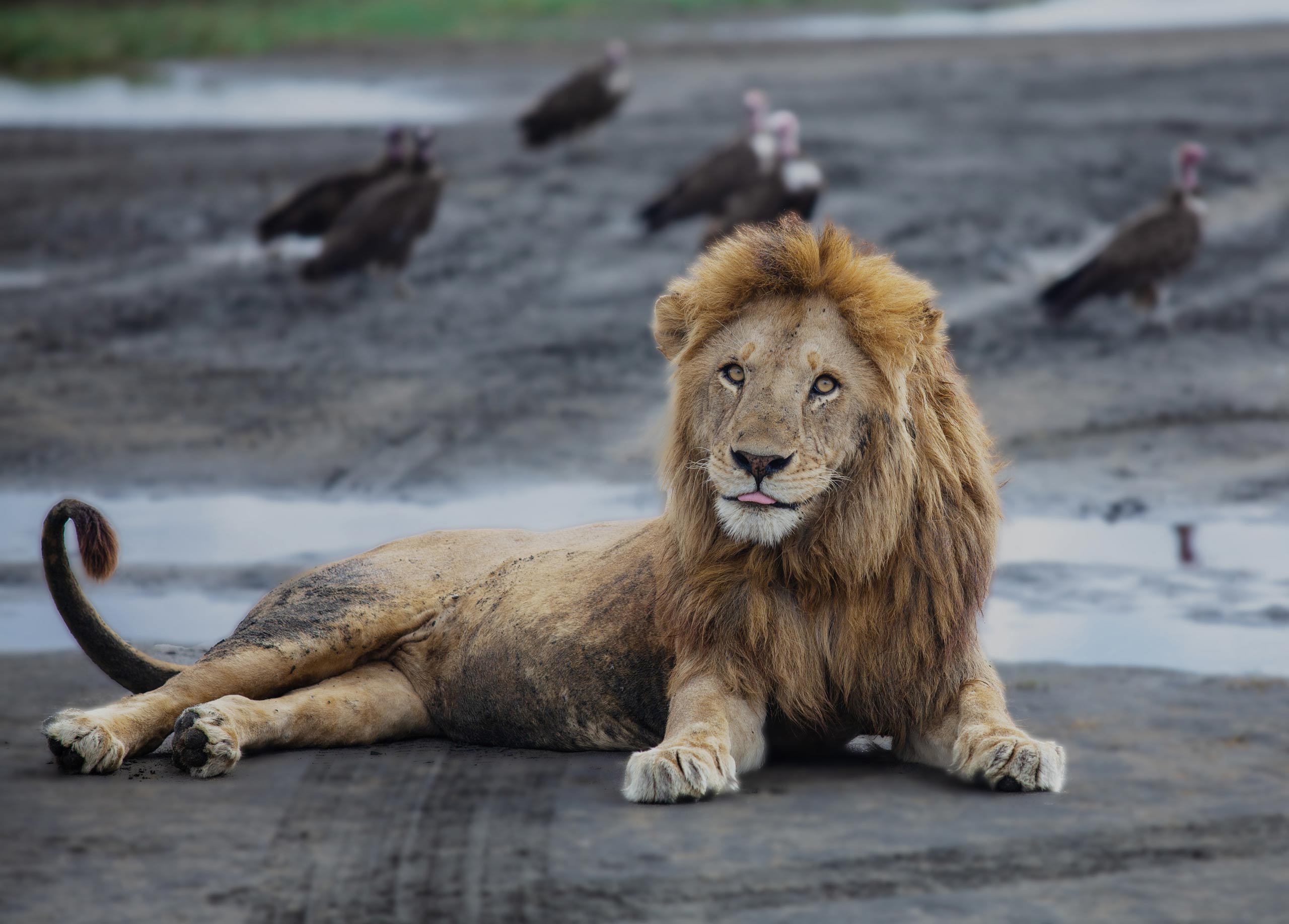 Serengeti National Park
The world famous Serengeti National Park is the First Largest Park in Tanzania; occupying about 14,763 sq Km (5700 sq miles). The parks name Serengeti means Endless plains and is derived from the Maasai word Siringiti. The Park lies in high platens between the Ngorongoro highlands and Tanzania/ Kenya border, and extends almost to lake Victoria. Various types of vegetation grassy plains, Savanna with acacias wooded hills and mountains are the backdrop for an extraordinary concentration of animals found nowhere else in the world, About 35 species of plains animals can be seen here including the so called big five. Almost 1.5 million wildebeest undertake a circuit of 1000Kms, Searching for new pastures and watering –holes and 200,000 zebras and 300,000 Thomson’s. The brie f population explosion of wildebeest produces over 8,000 calves a day before the migrations Starts. Location: Serengeti National Park is located 335 Km (about 208 miles) from Arusha, Stretching north to Kenya and bordering lake Victoria to the west. Best time to visit: To follow the wildebeest migration is December to July in the South of the Park and for Predators June to October to the west (western corridor) and to the north. Birdlife: The park is famous for over 500 varieties of bird to 100 types of dung beetle. Wildlife: The annual wildebeest migration, this spectacle sees more than 1 million wildebeest, 200,000 Zebra and 300,000 Thomson’s gazelles trek. As in all ecosystems the vegetation and types of animals you find are closely correlated. The principal feature of the park are the shirt and long grass open plains in the Southeast, the acacia Savannah in the Central area, the hilly, more densely wooded northern section. Access: From Arusha it is 6 hours drive, or 1 hour and 30 minutes charter flights. From Arusha, Lake Manyara and Mwanza Drive from Arusha you will pass through the entrance to Lake Manyara national Park and through the Ngorongoro Conservation area, the village in the heart of Serengeti is 335Km from Arusha Approaching from Mwanza and Musoma you take the road east and you will enter Serengeti through Ndabaka Gate in the West. To do: Hot air balloon safaris on Serengeti national park, Lake Natron to the north at the fort of Ol’doinyo Lengai volcano (2 to 3 days roundtrip) with the possibility of undertaking and visiting lake Victoria, the source of the ricle, to the west [2 to3 days roundtrip] from Mwanza, the regional capital a visit to the Rubondo National park located on an Island in the middle of the lake for fishing trip. Accommodation: Lodges, luxury tented camps and camp sites scattered through the park, lodges and tented camps just outside. Some of the Serengeti National Park lodges and campsite are Grumeti camp, Ikoma Bush camp, Kleins camp, Kusini, Lobo wildlife Lodge, Ndutu Safari Lodge, Serengeti Serene Lodge, Serengeti Sopa Lodge and Seronera wildlife Lodge. Others are Kirawira luxury tented, Ndasiata Migration Camp, Mbalageti camp. |

Serengeti National Park


