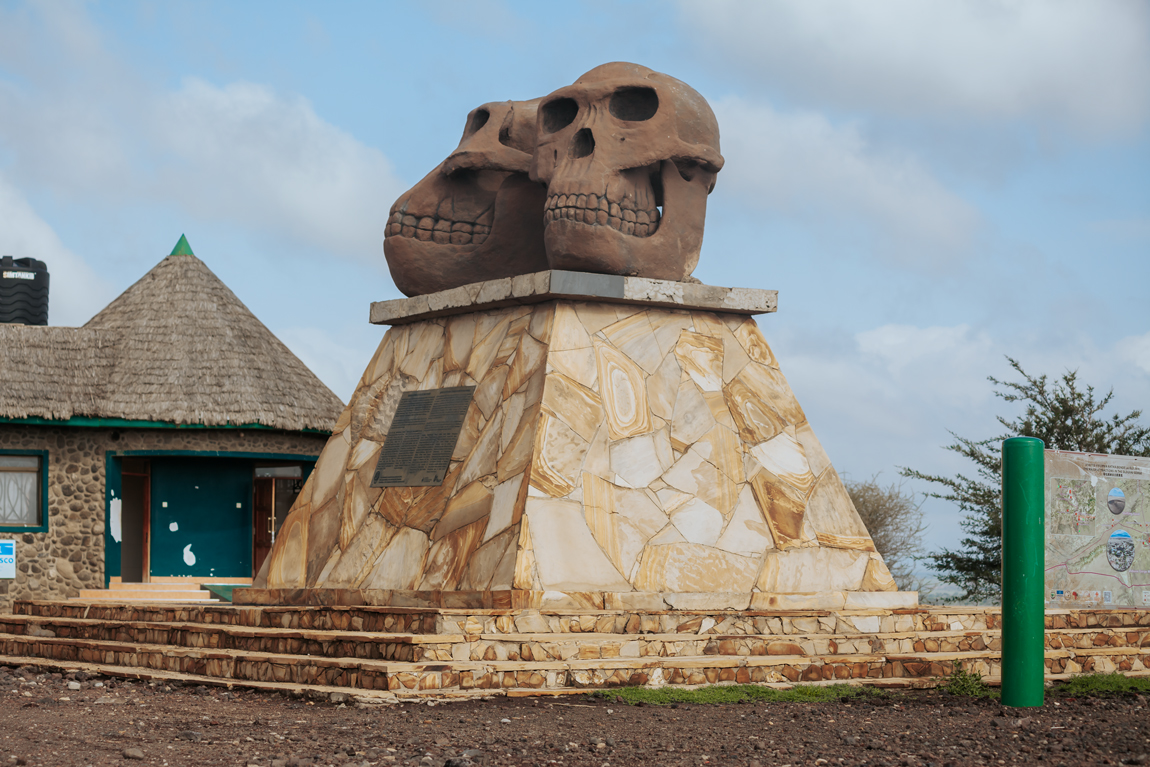
Begin your Olduvai Gorge Day Trip early in the morning with a comfortable drive toward the Ngorongoro Conservation Area in northern Tanzania. This journey takes you through changing landscapes, including rural villages, farmland, grazing areas, open plains, and the distinctive scenery of the Ngorongoro region. Along the way, your guide will introduce you to the area’s natural environment, local communities, wildlife, and geological history, giving you useful background before reaching Olduvai Gorge.
As you travel farther into northern Tanzania, the landscape becomes closely connected with the wider Great Rift Valley. Your guide will explain how volcanic activity, changing climates, water sources, and erosion have shaped this region over time. This makes the journey itself part of the experience and helps you understand why the area became so important for archaeological research.
For travelers interested in Olduvai Gorge Tanzania, the destination offers a different perspective on northern Tanzania. Instead of focusing only on wildlife, the visit explores archaeology, geology, fossils, early stone tools, and evidence that has helped scientists understand human origins. Located within the Ngorongoro Conservation Area, Olduvai can also be incorporated into a wider safari between Ngorongoro and Serengeti.
As you approach the gorge, your guide will explain the importance of the geological layers exposed across the landscape. Over time, these layers have preserved fossils, animal remains, stone tools, and other evidence from ancient environments. Understanding these natural layers helps visitors appreciate how researchers have been able to reconstruct aspects of life in the distant past.
Take your time exploring the museum and discussing the exhibits with your guide. Whether you have a strong interest in archaeology or are simply curious about human origins, the visit provides an accessible introduction to the discoveries associated with the gorge. Your guide can explain the evidence in simple terms and answer questions about early humans, prehistoric animals, archaeological research, and the development of early tools.
For travelers interested in Human evolution Tanzania, Olduvai provides an important connection between archaeological discoveries and the scientific study of our past. Fossils, tools, animal remains, and geological evidence can be examined together to understand how early human populations lived and responded to changing environments.
After exploring the archaeological area and museum, take some time to appreciate the surrounding landscape. The open plains and geological features of the Ngorongoro region provide an interesting contrast to the detailed history you have just learned. Your guide can explain how changes in climate, vegetation, water availability, and volcanic activity influenced the environment over long periods.
The experience can also be combined with wildlife viewing, making an Olduvai Gorge safari a distinctive addition to a northern Tanzania itinerary. While traveling through the wider Ngorongoro and Serengeti landscapes, you may encounter wildlife such as wildebeest, zebras, giraffes, gazelles, and other animals depending on the route and season. This combination allows you to experience both Tanzania’s wildlife and its prehistoric heritage.
For travelers visiting Olduvai Gorge from Ngorongoro, the site can be conveniently included in a safari itinerary connecting the Ngorongoro Crater with Serengeti National Park. Adding Olduvai gives the journey another dimension, combining wildlife viewing with archaeology, geology, and the history of human origins.
After your visit, enjoy lunch before continuing your journey. Depending on your itinerary, lunch may be arranged as a picnic or at a suitable lodge or designated location. Take time to relax, enjoy the surroundings, and reflect on the discoveries from the morning before continuing toward your next destination.
After lunch, continue through the Ngorongoro landscape with your guide. The drive provides further opportunities to enjoy the scenery and learn about the region’s wildlife, conservation areas, local communities, and geological features. If you are continuing toward Serengeti, the journey also provides a natural transition from the archaeological heritage of Olduvai to one of Tanzania’s most famous wildlife destinations.
As the journey comes to an end, you will have experienced a side of northern Tanzania that goes beyond traditional safari activities. The combination of archaeological discoveries, ancient landscapes, fossils, early tools, wildlife, and conservation creates a deeper understanding of the region and its long history.
Your Olduvai Gorge Day Trip ends with a return to your hotel or continuation to your next safari destination. The experience is ideal for travelers interested in archaeology, history, geology, photography, education, and human origins, as well as visitors who simply want to add something different to their Tanzania safari.
Combining the Olduvai Gorge archaeological site, museum, fossil discoveries, stone-tool history, and surrounding landscapes makes this experience much more than a short stop along a safari route. It offers an opportunity to explore an important part of Tanzania’s prehistoric heritage while traveling through the remarkable landscapes of the Ngorongoro Conservation Area.