
Animals of Gombe Stream National Park - Chimpanzees, Primates & Wildlife Guide 2026
Exploring the Fascinating Fauna of Gombe National Park Stream
Animals of Gombe Stream National Park are world-famous for their connection to the long-term chimpanzee research led by Dr. Jane Goodall, making the park one of Africa’s best places to observe wild chimpanzees in their natural habitat. These intelligent primates live in complex social groups and are commonly seen feeding, grooming, and moving through the forest during guided treks. The park also hosts other primate species, including blue monkeys, olive baboons, red colobus monkeys, red-tailed monkeys, and vervet monkeys, all contributing to its vibrant forest ecosystem.
Although large mammals are limited, visitors may occasionally spot bush pigs, small forest antelope, and hippos along the shores of Lake Tanganyika. Reptiles such as snakes, alongside amphibians, butterflies, and insects, enhance the park’s biodiversity. Rare and elusive leopards are believed to inhabit remote areas, while rich birdlife, including fish eagles, kingfishers, and hornbills, further adds to Gombe’s appeal. Together, the park’s forests, valleys, and lakeshore create a unique and intimate wildlife experience for nature lovers and conservation-minded travelers.
Gombe National Park Jane Goodall
Animals of Gombe Stream National Park, Tanzania, are world-renowned, largely due to one extraordinary story: Dr Jane Goodall’s long-running chimpanzee research, which began here in 1960 and transformed our understanding of primates and human nature. Before Goodall’s groundbreaking work, many believed chimpanzees were simply wild animals with limited intelligence. Her observations, however, revealed a far more complex picture: chimps form deep family bonds, communicate through gestures and vocalizations, show empathy, learn from one another, and even use tools.
Today, Gombe Stream National Park offers visitors the unique opportunity to connect with this global scientific legacy by observing a real, living population of chimpanzees in their natural forest home. The park’s top wildlife experience, chimpanzee trekking in Gombe, is unlike typical game drives. It’s a walking safari through steep forest trails and lush valleys, guided by rangers who read fresh signs like footprints, broken branches, and distant calls.
When you spot them, the encounter is often intimate and unforgettable: chimps grooming quietly in the shade, juveniles climbing and playing in the trees, or a dominant male asserting his presence with powerful displays. Since chimpanzees are wild and constantly moving, every trek is different, and sightings vary based on time of day, season, and the group’s location.
Beyond the excitement of spotting chimps, Gombe offers something even more profound: a rare chance to witness a species so closely related to humans, living freely in a protected landscape along the shores of Lake Tanganyika. It’s a moment that blends adventure, conservation, and history one that many travelers describe as the highlight of their entire Tanzania journey.
Chimpanzee of Gombe Stream National Park
The chimpanzee is the most famous of all the animals at Gombe Stream National Park and the star attraction for visitors and researchers alike. Gombe National Park, located along the scenic shores of Lake Tanganyika in Tanzania, is renowned worldwide because of Jane Goodall’s pioneering studies of chimpanzees. Her research revealed the remarkable intelligence, social behaviour, and emotional depth of these primates, showing that chimpanzees use tools, form strong social bonds, and even express empathy.
Observing chimpanzees in their natural habitat is a once-in-a-lifetime experience. These Gombe National Park animals live in communities called troops, which can range from a few individuals to over a hundred. Within these groups, chimpanzees engage in grooming, play, cooperative hunting, and communication through vocalizations and gestures. Visitors to Gombe National Park often marvel at how closely chimpanzees’ behaviour mirror aspects of human society, from problem-solving to forming alliances.
Conservation of chimpanzees is a top priority in Gombe National Park. These animals in Gombe National Park face threats from habitat loss and disease, making it crucial to protect their forests and rivers. Thanks to ongoing research and conservation efforts inspired by Jane Goodall’s work, Gombe National Park continues to serve as a safe haven for chimpanzees, allowing scientists and visitors to witness their fascinating lives.
Spending time watching chimpanzees in Gombe National Park is more than a wildlife experience, it’s an opportunity to connect with one of our closest living relatives. These extraordinary Gombe National Park animals remind us of the beauty, intelligence, and vulnerability of wildlife, inspiring continued efforts to preserve their home for generations to come.
Book Your Gombe Stream Safari
Tell us your budget & travel style, and we’ll design your dream safari
Blue Monkeys
While Gombe Stream National Park is primarily renowned for its chimpanzee research, it is also home to a variety of other fascinating primates, including the Blue Monkey. These monkeys are a remarkable part of the park’s diverse ecosystem, enriching the wildlife experience in this pristine landscape.
The Blue Monkey, known for its striking blue-grey fur and agile movements, is commonly seen among the dense forests of Gombe National Park. Unlike the more famous chimpanzees, these monkeys are arboreal, spending most of their time in the treetops, where they feed on fruits, leaves, and insects. They are often observed in small groups, communicating through a variety of vocalizations and body language. Though smaller than chimpanzees, Blue Monkeys have a keen sense of alertness, making them a joy to watch as they move swiftly through the trees.
For visitors, encountering these monkeys adds a unique dimension to chimpanzee trekking in Gombe. While chimpanzees are the main attraction, trekking through the lush forest trails may also bring you face-to-face with a group of Blue Monkeys. Their playful nature and beautiful, agile movements enrich the trekking experience.
The combination of observing chimpanzees and other primates, like the Blue Monkey, creates a memorable wildlife experience in Gombe Stream National Park. These moments connect visitors to the park’s rich biodiversity and provide an intimate look at the incredible variety of species that inhabit this protected landscape along the shores of Lake Tanganyika. Whether you’re trekking to observe chimpanzees or encountering Blue Monkeys in the wild, the park offers a rare opportunity to witness primates in their natural habitat, making the animals of Gombe Stream National Park an unforgettable experience.
Olive Baboons
The Olive Baboon is one of the most captivating and widespread primates found in Gombe Stream National Park. Known for their distinctive golden-olive fur and social behaviors, these baboons are a key part of the park’s vibrant wildlife. Unlike other primates in the park, such as chimpanzees, Olive Baboons are more terrestrial, spending much of their time on the ground, foraging for food and interacting in large groups.
Among the animals of Gombe Stream National Park, the Olive Baboon plays an important ecological role in the park’s diverse ecosystem. Baboons are known for their strong social bonds, and seeing them in action, whether it’s grooming, foraging, or playing, provides visitors with extraordinary insight into the intricate dynamics of primate social life. They are highly vocal and often emit loud calls that echo through the forest, signaling their presence.
When trekking through the lush trails of Gombe Stream National Park, visitors may encounter these playful yet sometimes mischievous animals. Whether near the shores of Lake Tanganyika or in the forested hills, Olive Baboons are an unforgettable part of the Gombe Stream National Park wildlife experience.
Though the park is renowned for chimp trekking, observing the Olive Baboons offers a different but equally rewarding aspect of the park’s biodiversity. Their interactions with the environment and with each other underscore the importance of preserving these species and their habitats.
Red Colobus Monkeys
The Red Colobus Monkeys are one of the most unique and endangered species found in Gombe Stream National Park. These vibrant primates, with their distinct reddish fur and long tails, are a true highlight for visitors trekking through the park. Known for their acrobatic skills, they are often seen leaping gracefully through the trees, moving quickly from one branch to another in search of fruit and leaves.
As part of the animals of Gombe Stream National Park, the Red Colobus Monkeys are a rare and vital species within the park’s ecosystem. Their numbers have been significantly reduced due to habitat loss, making their presence in Gombe even more special. For those lucky enough to witness them in the wild, it’s a memorable experience that highlights the importance of conservation in this UNESCO World Heritage site.
If you’re planning to visit and wondering how to get to Gombe Stream National Park, it’s accessible by boat from the nearby town of Kigoma or by plane to the local airstrip, followed by a boat ride across the stunning Lake Tanganyika. Once there, the opportunity to witness these incredible monkeys and other unique species awaits.
Seeing the Red Colobus Monkeys is a reminder of the incredible biodiversity of Gombe Stream National Park wildlife, and their presence enriches the park’s status as one of the world’s most important conservation areas.
Red-Tailed Monkeys
The Red-Tailed Monkeys are a fascinating species found in Gombe Stream National Park. Known for their striking red-orange tails and playful nature, these monkeys are often spotted leaping through the park’s lush forests. As arboreal animals, they spend most of their time in the canopy, feeding on fruits, leaves, and insects.
These monkeys contribute to the park’s diverse wildlife, living in small social groups and occasionally interacting with other primates, such as chimpanzees. Their agility and lively manner make them a favourite sight for visitors during chimp trekking in Gombe excursions.
Seeing Red-Tailed Monkeys in their natural habitat adds a special touch to exploring the park, offering visitors a glimpse into one of the more fascinating species of Gombe National Park. Their quick movements and vibrant tails enhance the forest’s beauty, creating unforgettable moments for nature lovers and wildlife enthusiasts.
Vervet Monkeys
Vervet Monkeys are another attractive species found in Gombe Stream National Park. Known for their distinctive greenish fur and playful behaviour, these monkeys are commonly seen in the park’s dense forests. They are highly social, often found in large groups, interacting with each other and with other species such as the famous chimpanzees.
These monkeys spend much of their time foraging for fruits, seeds, and insects, adding to the park’s vibrant ecosystem. They are often spotted during chimp trekking excursions, giving visitors a chance to observe their lively, curious nature. Their vocalizations are a common sound while trekking through the forest, as they communicate with each other across the trees.
For visitors, spotting Vervet Monkeys is an exciting addition to the wildlife experience. Their playful antics and social interactions make them an unforgettable part of any journey. These monkeys enrich the area’s biodiversity and enhance the adventure, offering an engaging experience that connects visitors with Gombe’s diverse wildlife.


Bush Pigs
Bush Pigs are one of the most elusive species found in Gombe Stream National Park. These nocturnal animals are rarely seen during the day, as they typically rest in dense vegetation and emerge at night to feed on roots, tubers, and fruits. Their secretive nature makes every sighting a truly special moment for visitors exploring the park.
As part of the animals of Gombe Stream National Park, Bush Pigs play a vital ecological role by helping maintain the food chain and contributing to the park’s rich biodiversity. They are often seen in small family groups led by a dominant boar, moving quietly through the forest floor in search of food. Their strong snouts are perfectly adapted for digging and rooting through the soil.
Seeing Bush Pigs in their natural habitat adds an exciting and unexpected dimension to any Gombe Stream National Park wildlife experience, connecting visitors not only with the famous chimpanzees but also with the wider array of species that call this extraordinary park home.
Hippos
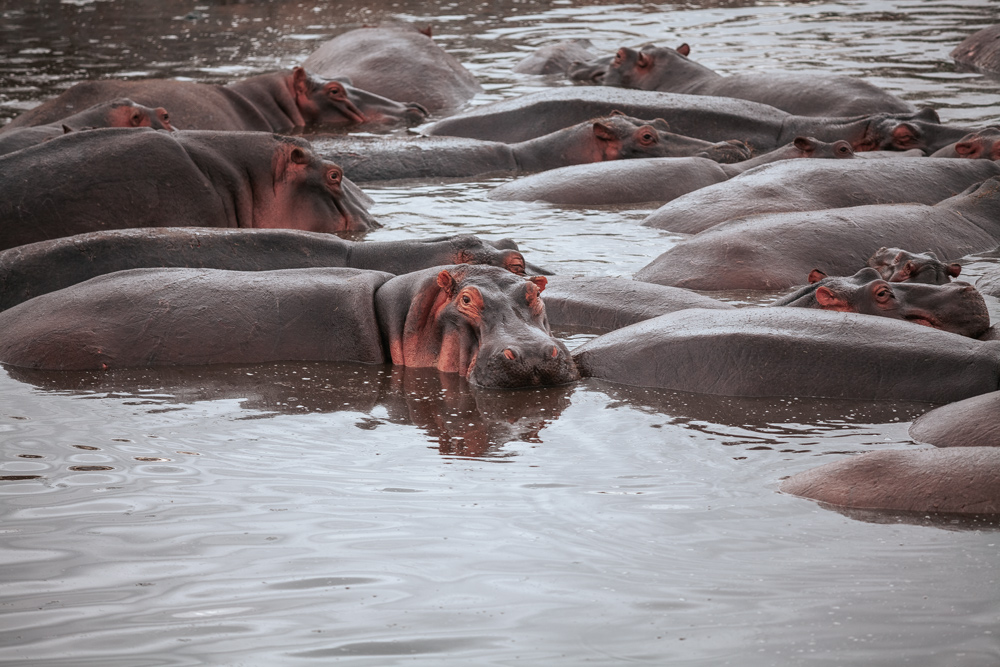
While Gombe Stream National Park is best known for chimpanzee trekking, it is also home to a diverse range of animals, including the magnificent hippos. Found along the shores of Lake Tanganyika, these semi-aquatic creatures are often spotted resting in the water or grazing near the lake’s edge, adding to the park’s rich biodiversity.
Among the animals of Gombe Stream National Park, hippos play an important role in maintaining the ecosystem’s balance. Although not as commonly encountered as chimpanzees, visitors can often hear their distinctive grunts and see their large, powerful bodies moving through the water. Hippos are herbivores that primarily feed on grasses at night, and their presence adds a unique aspect to any visit to Gombe National Park.
For those on a chimpanzee trek in Gombe, the chance to spot hippos in their natural habitat is an exciting bonus. Whether you’re tracking chimps or simply enjoying the park’s serene landscapes, it offers unforgettable moments with its fascinating wildlife.
Leopards
Leopards are one of the most elusive and beautiful predators in Gombe Stream National Park. Known for their sleek coats and quiet movements, these big cats are often hidden deep in the park’s forests, making them a rare but thrilling sight for visitors. Unlike more commonly seen species, leopards tend to avoid human presence, which only adds to their mystique.
Among the animals of Gombe Stream National Park, leopards play a crucial role in maintaining the ecosystem’s balance. Though they are not frequently encountered during chimpanzee trekking, their tracks and signs of their presence are sometimes visible, offering a reminder of the park’s rich wildlife diversity.
For those lucky enough to spot a leopard, it’s an unforgettable moment. Whether perched high in a tree or moving silently through the undergrowth, the sight of this magnificent predator is a rare treat. In addition to chimpanzee sightings, encountering a leopard in its natural habitat adds an extraordinary layer to the adventure of exploring Gombe National Park.
Small Antelope
In the heart of Gombe Stream National Park, small antelopes like the Dik Dik add a touch of elegance to the vibrant ecosystem. These agile creatures are often seen grazing peacefully or darting through the forest, blending seamlessly into the park’s lush surroundings.
As part of the animals of Gombe Stream National Park, they play a vital role in maintaining the balance of the park’s food chain. Their swift movements and shy nature make them a rare but delightful sight for visitors on chimpanzee trekking adventures.
Spotting these small antelopes is a serene and rewarding experience, enhancing the thrill of exploring the diverse wildlife that calls Gombe National Park
Snakes
Snakes are an interesting part of the animals of Gombe Stream National Park. These elusive reptiles slide through the park’s dense vegetation, often hidden from view but playing a key role in maintaining the ecological balance. Species like the puff adder and black mamba can be found in the park, though sightings are rare due to their secretive nature.
For those trekking through the lush forests on a chimpanzee trek in Gombe national adventure, the possibility of encountering a snake adds an element of surprise. Despite their fearsome reputation, snakes in Gombe contribute to the park’s biodiversity, helping control populations of small mammals and insects.
While snakes are often elusive, their presence in Gombe National Park is a reminder of the park’s rich and varied wildlife, making any trek through its forests even more exciting.
Best Time to Visit Gombe National Park
The optimal time for chimpanzee trekking in Gombe National Park is the dry season from June to October, especially July to September, when chimpanzees remain on the lower slopes, and trails are firm. Although the park is open year-round, the dry months provide the best hiking conditions and visibility due to minimal rainfall.
Key Considerations by Season:
- Best for Chimpanzee Tracking (June – October): The dry season provides the easiest forest access and the highest likelihood of quick, successful chimpanzee sightings.
- Best for Birding and Scenery (November – April): The wet season transforms the park into a lush, scenic landscape with fewer visitors. Trails may be slippery, making trekking more challenging despite the forest’s beauty.
- Best for Photographers: The dry season offers clear views, but many photographers prefer the wet season’s vibrant, green landscape despite increased rainfall.
- Important Logistics: The only private lodge in the park is usually closed from March to May. Access is exclusively by boat, typically from Kigoma.
While chimpanzees can be seen year-round, the drier, cooler months from June to September are considered best for a comfortable and productive trekking experience.
Tanzania Safari from Canada FAQ
1.What is the main animal to see in Gombe?
The chimpanzee is the star attraction. Gombe is world-famous for its long-term chimpanzee research started by Jane Goodall.
2. Are the chimpanzees used to humans?
Yes. The chimpanzees are habituated, meaning they are used to human observers. However, they are still wild animals and must be treated with respect.
3.How close can I get to chimpanzees?
You must stay at least 10 meters (33 feet) away at all times.
4. Is chimpanzee trekking guaranteed?
Chimpanzee sightings are highly successful year-round, but they are easier to track during the dry season (July–October) when trails are less slippery.
5.What other primates live in Gombe?
Besides its famous chimpanzees, Gombe National Park is home to a rich variety of primates and wildlife. Visitors may encounter olive baboons, red colobus monkeys, red-tailed monkeys, blue monkeys, vervet monkeys, and nocturnal bush babies. These diverse species, together with over 200 bird species and other forest wildlife, make Gombe a rewarding destination for nature lovers, wildlife photographers, and primate enthusiasts.
6. Are there predators in Gombe?
Yes, leopards are the main predator in Gombe Stream National Park, though they are rarely seen due to their elusive nature. Crocodiles inhabit the shores of Lake Tanganyika. Gombe does not have lions, buffalo, or elephants as the dense forest habitat does not support large savanna predators.
7. Are there any “Big Five” animals?
No. Gombe does not have lions, elephants, buffalo, or rhinos. The forest habitat is not suitable for large savanna animals.
8. What other mammals can I see?
Besides chimpanzees and other primates, Gombe National Park is home to a variety of mammals, including bushbucks, bush pigs, civets, and white-tailed mongooses. While these animals are often shy and harder to spot, they add to the park’s remarkable biodiversity and make every forest walk a unique wildlife experience. Visitors may also encounter a wide range of bird species, reptiles, and butterflies throughout the park.
9. Is bird watching good in Gombe?
Yes, Gombe National Park is an excellent destination for bird watching, with over 200 recorded bird species. Bird enthusiasts can spot iconic species such as the African fish eagle, palm-nut vulture, Livingstone’s turaco, and Peter’s twinspot. The park’s diverse habitats, including forests, lakeshores, and woodland areas, make it a rewarding destination for both experienced birders and casual wildlife lovers.
10. What lives in Lake Tanganyika?
Lake Tanganyika is one of the world’s deepest freshwater lakes, home to over 350 species of cichlid fish found nowhere else on Earth. Visitors can also spot Nile crocodiles along the shores, hippos resting near the water’s edge, and a variety of water birds including African fish eagles and kingfishers.
11. Are any animals dangerous?
Yes, although Gombe National Park is generally safe when visited with an experienced guide. Chimpanzees are wild and incredibly powerful, so it is essential to follow your guide’s instructions at all times during trekking. Olive baboons can be bold, particularly around the beach and visitor areas, so avoid feeding or approaching them. Leopards also inhabit the park but are rarely seen due to their secretive nature. In the waters of Lake Tanganyika, crocodiles and hippos may be present, so visitors should follow all safety advice when near or in the lake.
12. What are the chimpanzee trekking rules in Gombe National Park?
To protect both visitors and the endangered chimpanzees, Gombe National Park has strict trekking regulations. The minimum age for chimpanzee trekking is 15 years, and each guide leads a maximum of six visitors to minimize disturbance. Once the chimpanzees are located, visitors are allowed to spend up to one hour observing them. A minimum distance of 10 metres must always be maintained, and wearing a surgical face mask is mandatory when near the chimpanzees to help prevent the transmission of human diseases. Following these rules ensures a safe, responsible, and unforgettable wildlife experience.
13. When is the best time to see animals?
The best time to visit Gombe National Park is during the dry season, from July to October, when forest trails are drier and chimpanzees are generally easier to track. The wet season, from November to May, transforms the park into a lush, green paradise with excellent scenery and bird watching. However, trekking can be more challenging due to muddy trails and thicker vegetation. Both seasons offer rewarding wildlife experiences, depending on your travel preferences.
14. How many primate species live in Gombe?
Gombe National Park is home to seven primate species, making it one of Tanzania’s most important destinations for primate conservation. These include the famous eastern chimpanzees, olive baboons, red colobus monkeys, red-tailed monkeys, blue monkeys, vervet monkeys, and bush babies. This remarkable diversity offers visitors an exceptional opportunity to observe a variety of primates in their natural forest habitat.
Plan your Trip
Ready to start planning your own incredible adventure?
We make the process stress-free and enjoyable.